
On this page
- Shopify vs WooCommerce at a glance
- Payments in Pakistan: the deciding factor
- What does each cost over a year?
- Worked example: year one for a store selling PKR 300,000 a month
- Cash on delivery, couriers and returns
- Do you need your own store if you sell on Daraz?
- Which is better for SEO?
- When should you choose Shopify?
- When should you choose WooCommerce?
- Quick decision guide
- Can you switch later?
- Summary
- References
For most Pakistani online stores, the Shopify vs WooCommerce choice comes down to cost and upkeep: WooCommerce is cheaper to run and easier to connect to local payment methods, while Shopify is quicker to launch and needs less technical upkeep. Shopify’s Basic plan costs US$25 a month billed monthly, or US$19 a month billed yearly. Because Shopify Payments is not available in Pakistan, you use a third-party payment provider, and Shopify adds its own transaction fee on those payments. WooCommerce is a free WordPress plugin: you pay for hosting, a domain and any paid extensions.
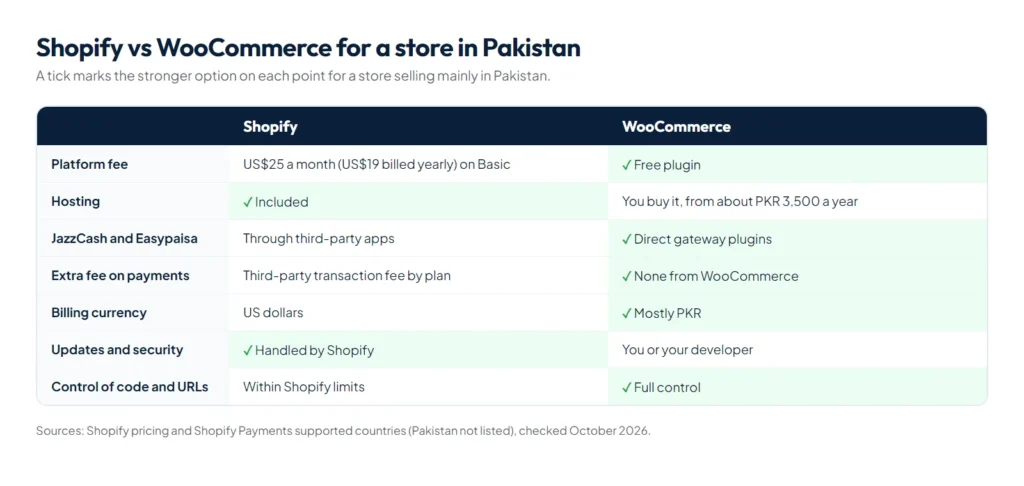
Both can sell with cash on delivery, both can rank on Google, and both can look professional. The real differences are cost in dollars versus rupees, local payments, and how much control you need. Here is how they compare for a store selling in Pakistan.
Shopify vs WooCommerce at a glance
| Shopify | WooCommerce | |
|---|---|---|
| Platform cost | Basic US$25 a month (US$19 billed yearly), Grow US$65 (US$49), Advanced US$399 (US$299) | Free plugin |
| Hosting | Included | You buy it, from about PKR 3,500 a year for a small store |
| Local payments | Shopify Payments is not available in Pakistan; use third-party providers | Gateway plugins for JazzCash, Easypaisa, banks and aggregators |
| Extra platform fee on payments | Third-party transaction fee, rate depends on plan | None from WooCommerce; only the gateway’s fee |
| Billing currency | US dollars, by card | Mostly PKR for local hosting; some extensions in dollars |
| Setup | Hours to days without a developer | Usually built by a developer |
| Updates and security | Handled by Shopify | You or your developer update plugins and keep backups |
| Control | Themes and apps within Shopify’s limits | Full control of code, data and URLs |
Plan prices are from Shopify’s pricing page; Shopify Plus starts at US$2,300 a month.
Payments in Pakistan: the deciding factor
Shopify’s list of Shopify Payments countries does not include Pakistan, and Shopify says that if your country isn’t listed, you need to use a third-party payment provider. Pakistani stores therefore add JazzCash, Easypaisa or card payments through apps from local gateways and aggregators, and Shopify charges its third-party transaction fee on those payments, at a rate that depends on your plan. That fee comes on top of the gateway’s own charges.
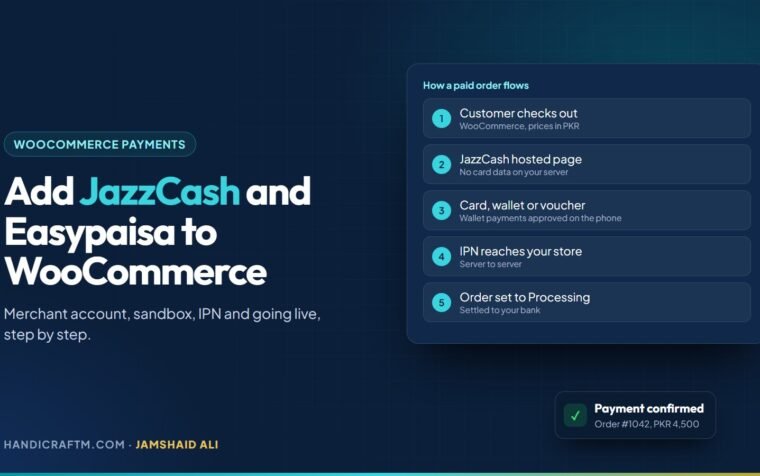
WooCommerce has no platform fee on payments. You install the gateway’s plugin and pay only the gateway. Our step-by-step guide to adding JazzCash and Easypaisa to WooCommerce covers the whole process. Both platforms support cash on delivery, which many Pakistani shoppers still prefer.
What does each cost over a year?
- Shopify Basic, billed yearly: US$19 x 12 = US$228 a year for the platform alone, plus paid apps (usually monthly, in dollars) and the third-party transaction fee on every online payment.
- WooCommerce: shared hosting from about PKR 3,500 to 10,000 a year for a small store (more for a busy one), a domain from about PKR 1,800 a year, and premium extensions from about PKR 2,000 to 10,000 each per year if you need them.
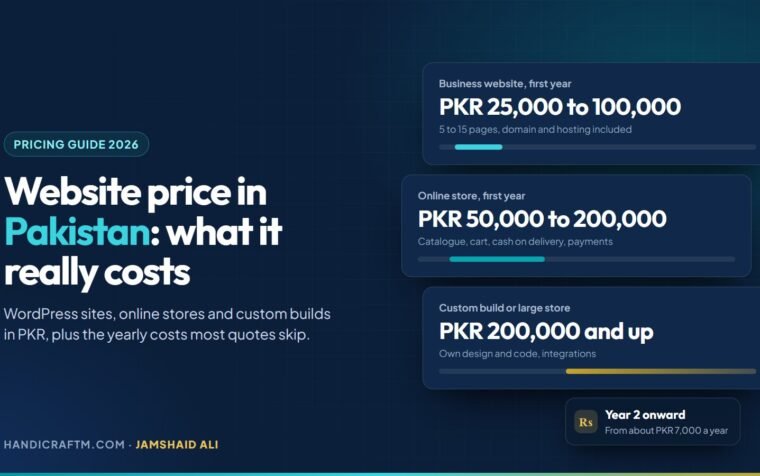
The build itself is a separate cost on both. Our guide to the website price in Pakistan puts a small or medium online store at PKR 50,000 to 200,000 in the first year, and our domain and hosting guide covers the running costs.
Worked example: year one for a store selling PKR 300,000 a month
Platform fees only become real with numbers. Take a store selling PKR 300,000 a month, with 60% paid online (wallet or card) and 40% by cash on delivery. The assumptions are stated so you can swap in your own: US$1 = PKR 280, two paid Shopify apps at US$10 a month each, Shopify’s third-party fee at the widely reported 2% on Basic, and WooCommerce maintenance outsourced at PKR 3,000 a month. Gateway charges are left out because they apply on both platforms.
| Year-one running cost | Shopify Basic (yearly billing) | WooCommerce |
|---|---|---|
| Platform | US$228, about PKR 63,840 | Free |
| Hosting and domain | Included (domain about PKR 4,000) | About PKR 12,000 |
| Paid apps or extensions | US$240, about PKR 67,200 | About PKR 10,000 |
| Platform fee on online payments (PKR 2.16 million a year) | 2%, about PKR 43,200 | None |
| Updates, backups and security | Included | About PKR 36,000 if outsourced |
| Total | About PKR 178,000 | About PKR 58,000 |
The gap grows with sales, because Shopify’s fee scales with every online payment while WooCommerce’s costs stay mostly flat. It shrinks if you run the store yourself on Shopify with no paid apps, or if most of your orders are cash on delivery. Either way, the build is a separate cost on both platforms.
Cash on delivery, couriers and returns
In Pakistan the order is not finished when the customer clicks Buy. Most stores still take a large share of orders as cash on delivery, so the courier link matters as much as the platform:
- Booking: the integration should book the shipment and print the airway bill from the order, not from a separate courier portal.
- Tracking: the customer should get the tracking number automatically by SMS, email or WhatsApp.
- Status sync: delivered, returned and cancelled statuses should flow back into the order, so stock and reports stay right.
- Cash on delivery remittance: check how quickly the courier pays you the collected cash and what it charges for it; slow remittance ties up working capital.
- Fake orders and returns: confirm cash on delivery orders by phone or WhatsApp before dispatch, and track return rates per city.
The major couriers offer integrations for one or both platforms, but they change often, so check the current app or plugin for your courier before you choose. On WooCommerce, a developer can also connect a courier’s API directly when no ready plugin fits.
Do you need your own store if you sell on Daraz?
Many sellers use both. A marketplace such as Daraz brings buyers who are already searching, but it takes a commission on each sale, sets the rules and keeps the customer relationship. Your own store is slower to start, because you have to bring the traffic, but you keep the customer data, set your own prices and returns policy, and build repeat sales that cost nothing extra. A common path is to test products on a marketplace and move your best customers to your own store with loyalty offers and WhatsApp follow-ups.
Which is better for SEO?
Both can rank well. WooCommerce runs on WordPress, so you control every URL, heading, schema field and content page, and you can run a full blog alongside the store. Shopify uses fixed URL patterns such as /products/ and /collections/ and limits some technical settings, though it handles the basics well. On both, speed depends mostly on the theme and how many apps or plugins you add.
When should you choose Shopify?
- You want to start selling this week without a developer.
- You sell mainly to customers abroad and can use international payment providers.
- You would rather pay a monthly fee than manage updates, backups and security.
When should you choose WooCommerce?
- Most of your customers are in Pakistan and pay by wallet, card or cash on delivery.
- You want to avoid dollar subscriptions and extra platform fees on payments.
- You need custom features, such as courier booking, custom pricing rules or a link to your inventory software.
- You want full ownership of your store’s code and data.
Quick decision guide
| If this describes you | Choose |
|---|---|
| You want to sell this week and have no developer | Shopify |
| Most buyers are in Pakistan and pay by wallet, card or cash on delivery | WooCommerce |
| You sell mainly abroad through international payment providers | Shopify |
| You want rupee costs and no platform fee on payments | WooCommerce |
| You need courier, inventory or pricing features no app offers | WooCommerce |
| You never want to think about updates or backups | Shopify |
Can you switch later?
Yes. Products, customers and orders can be exported from one platform and imported into the other. The design has to be rebuilt, and every old product and category URL needs a redirect to its new address, or you lose the Google rankings you have built.
Summary
Shopify vs WooCommerce in Pakistan comes down to payments and running costs. Shopify is the faster start, but it bills in dollars and adds a fee on local payment providers because Shopify Payments isn’t available here. WooCommerce takes more setting up, then costs less to run and connects directly to JazzCash, Easypaisa and local banks. For a store selling mainly in Pakistan, we usually recommend WooCommerce; see our e-commerce page for how we build them, and our guide to JazzCash and Easypaisa on WooCommerce for the payment setup.
References
- Shopify pricing, plan prices and the note that third-party transaction fees depend on the plan
- Shopify Payments supported countries, Shopify Help Center
- WooCommerce, the free WordPress e-commerce plugin